The Electric Self
1. Donahue, William. "550 A New You Part 1." Lecture. *Hidden Meanings*, 2011.
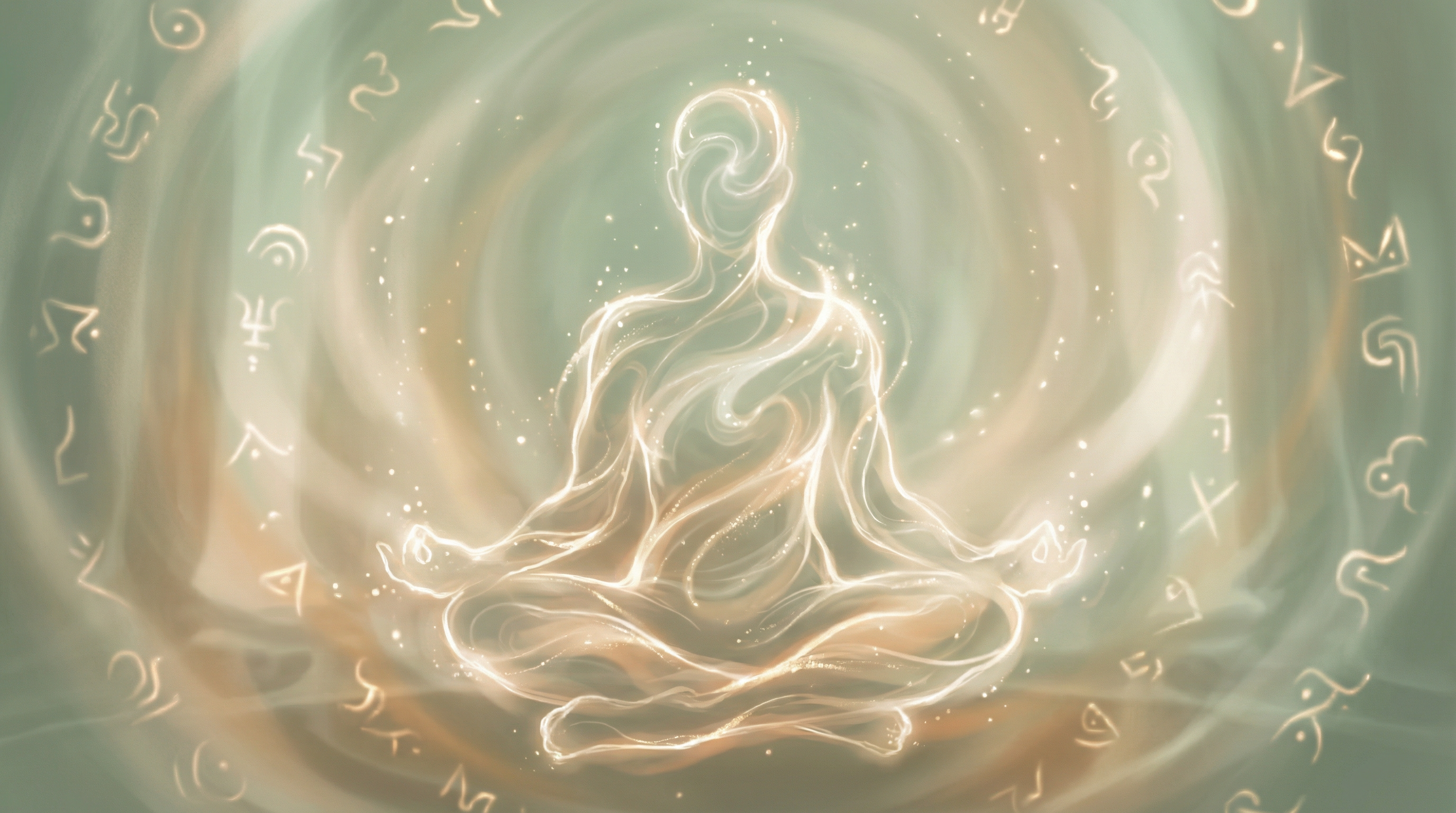
When William Donahue posits that humans are "electrical beings," he is referring to the fundamental reality that every aspect of consciousness, thought, and physical function is mediated by electrical signals. These signals traverse the nervous system at high speeds, forming the basis of sensation and movement. The brain alone generates measurable electrical activity, and the heart's rhythmic beat is entirely dependent on internal electrical impulses. This perspective collapses the traditional mind-body dichotomy, suggesting that the self is not a static entity but a dynamic, constantly evolving pattern of electrical activity and flux.
Understanding the electrical nature of being requires recognizing the massive scale of neural activity. The human brain, housing approximately eighty-six billion neurons, relies on the action potential—a brief electrical pulse caused by the flow of ions across the cell membrane—as its basic unit of information transfer. When a neuron fires, this electrical impulse travels down its axon, eventually triggering the release of neurotransmitters across the synaptic gap to the next neuron. Consciousness, therefore, emerges not as a single event but as massive, coordinated cascades of these electrical and chemical transmissions propagating through vast, interconnected neural networks.
[Image blocked: Human figure with electrical energy flowing through nervous system]
The collective electrical output of the brain can be measured using electroencephalography (EEG), revealing distinct brain wave patterns that directly correspond to different states of consciousness. For instance, alert focus is characterized by Beta waves, while deep sleep is dominated by Delta waves. These patterns—Alpha, Theta, Beta, and Delta—are not merely byproducts of mental states; they are the physical manifestation of consciousness itself. Specific electrical patterns in the prefrontal cortex correlate with thinking, and shifts in the limbic system reflect emotional processing, confirming that one's identity is, at its core, a complex, organized pattern of electrical activity.
The electrical foundation of life extends far beyond the brain, encompassing the entire nervous system and cellular function. Peripheral nerves transmit signals electrically, enabling rapid responses like withdrawing a hand from heat. Crucially, every cell maintains an electrical gradient across its membrane, a potential essential for regulating cellular processes and nutrient flow. The heart provides the most dramatic evidence of this electrical reliance; its coordinated contraction is driven by rhythmic electrical impulses generated by the sinoatrial node, a process so vital that its disruption (arrhythmias) is often treated with external electrical intervention, such as defibrillation.
[Image blocked: Electrical energy patterns in the brain]
If the self is defined by this electrical pattern, identity must be viewed as a continuous process rather than a fixed substance, aligning with philosophical concepts of the self as a "stream." This perspective suggests that personal identity resides not in the physical neurons or DNA, but in the persistent, coherent pattern emerging from their interaction. This dynamic pattern provides continuity, much like a river maintains its identity despite the constant change of water flowing through it. Carl Jung's concept of the Self can be reinterpreted here as the organizing principle—the persistent electrical pattern that integrates conscious and unconscious contents, providing stability amidst constant flux.
The recognition of our electrical nature has led to powerful therapeutic interventions aimed at modulating consciousness directly. Techniques like Deep Brain Stimulation (DBS) and Transcranial Magnetic Stimulation (TMS) are already used to treat conditions like Parkinson's and depression by delivering targeted electrical or magnetic pulses to influence neural activity. Furthermore, non-technological methods, such as meditation, measurably alter brain wave patterns, increasing Alpha and Theta waves associated with deep awareness. This demonstrates that humans possess the inherent capacity to consciously influence and reprogram their own electrical patterns for healing and cognitive enhancement.
Ultimately, embracing the concept of the electric self is not a reductionist view, but an acknowledgment that consciousness is a physical phenomenon where mind and matter are two sides of the same reality. This understanding invites profound questions about free will, suggesting that freedom is gained through becoming conscious of these electrical influences—whether genetic, psychological, or environmental—and actively working to modify them. By recognizing that we are dynamic electrical patterns rather than fixed entities, we gain the power to participate in our own evolution, fulfilling the potential to become the conscious programmers of our own electrical destiny.
[Image blocked: Consciousness emerging from electrical patterns]
References:
- Donahue, William. "550 A New You Part 1." Lecture. Hidden Meanings, 2011.
- Kandel, Eric R.,